


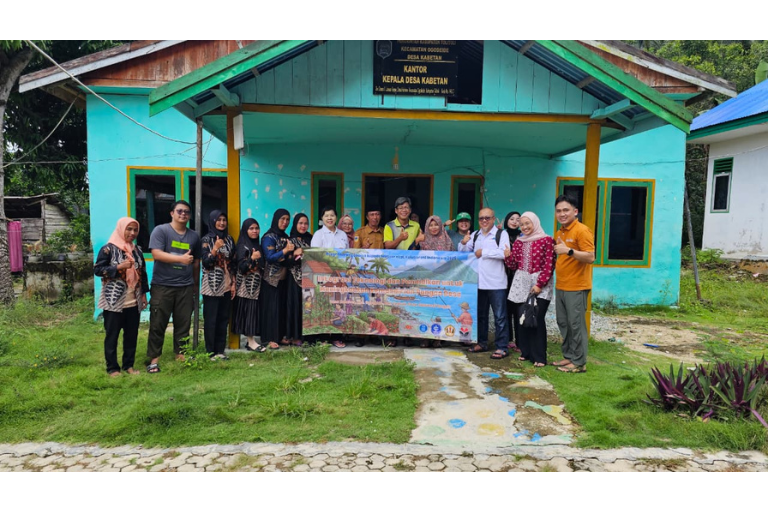
Toli-Toli – September 12, 2025. Dr. Saleha Rodiah, M.Si., a lecturer from the Library and Information Science Study Program at the Faculty of Communication Sciences, Padjadjaran University, participated in the Indonesia Collaboration Community Service Program (PMKI) from September 6 to 12, 2025. The program was titled “Integration of Technology and Education to Enhance Food Self-Sufficiency, Kabetan Village, Toli-Toli Regency, Central Sulawesi Province.” This activity was a collaborative PMKI initiative involving several state universities with legal entities (PTNBH), including: partner executor Irfan Zidni, S.Pi., M.P., Ph.D from Padjadjaran University (Unpad); lead executors Dr. Sri Raharno S.T, M.T and Indria Herman, S.T., M.T., Ph.D from Bandung Institute of Technology (ITB); and other partner executors Dr. Roza Yusfiandayani, S.Pi. from Bogor Agricultural University (IPB), Dr. Eddy Prasetyo Nugroho, M.T. from Indonesia University of Education (UPI), and Dr. Saleha Rodiah, M.Si. from Padjadjaran University (Unpad). The program’s goals were to support food security, inclusive quality education, clean water availability, and the use of renewable energy.
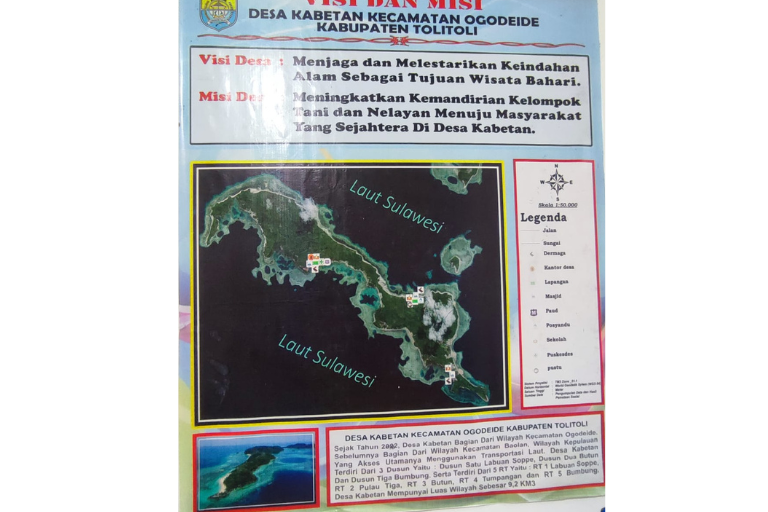
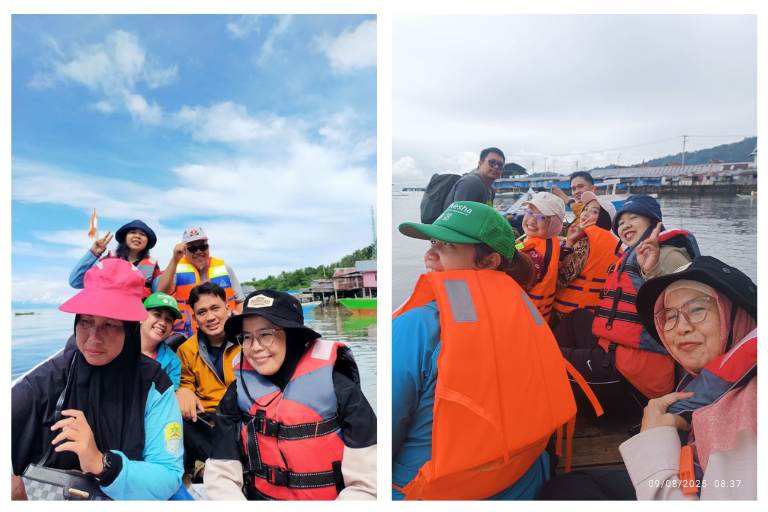
Kabetan Village, located in Toli-Toli Regency, Central Sulawesi Province, consists of three hamlets: Hamlet 1 (Soppe), Hamlet 2 (Butun), and Hamlet 3 (Bumbung). The majority of the residents are from the Toli-Toli, Mamuju, Mandar, and Bugi ethnic groups. Their livelihoods are primarily fishing and farming, and 100% of the community practices Islam. Kabetan Village is situated on Kabetan Island, which is a 1.5-hour boat trip from Toli-Toli City. The distance between each hamlet is covered by a 30-50 minute sea journey by boat or a land route through the forest and along the coast.
Kabetan Village was chosen as the location for PMKI because it still faces several challenges, including a shortage of staple foods like rice, clean water, vegetables, and fruits, which are all brought in from off the island. Additionally, there is a lack of optimal utilization of the village’s potential in fisheries (fishing) and agriculture (coconuts) to meet community needs, as well as limited access to clean water and electricity.
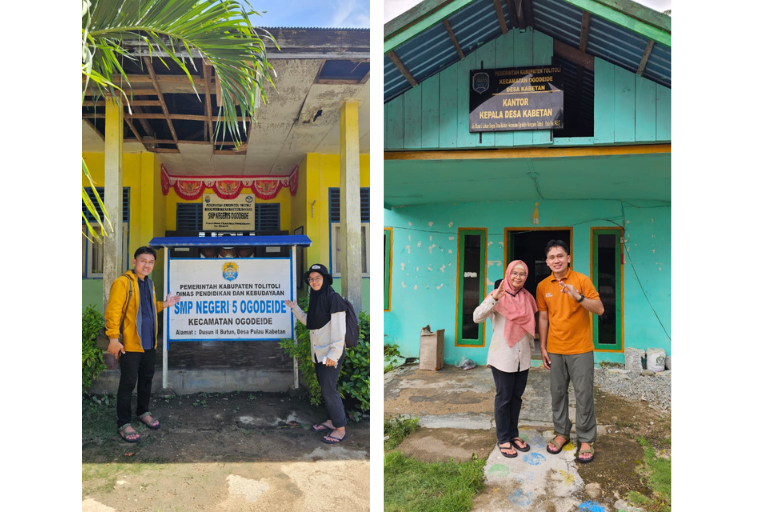
In terms of education and government access, Hamlet 1 has a PAUD (Early Childhood Education) and SD Kabetan (Kabetan Elementary School). Although 11 teachers and a principal are registered, only 4 are actively working due to the school’s distance from the city. Hamlet 2 has a PAUD, SD Butun (Butun Elementary School), and SMPN 5 Ogodeide (Ogodeide Middle School). Hamlet 3 has SD Cerah Hati (Cerah Hati Elementary School – satellite class) with only 1 of its 6 registered teachers actively working, and they are only present a maximum of 1 day per week. As a result, students must attend classes at SD Butun, or a teacher from SD Kabetan or SD Butun visits the students in Bumbung Hamlet. The schools in each hamlet are difficult to access, which has led some teachers to reside in the provided official residences or use other rooms, such as the UKS (Student Health Unit) as a classroom. Classroom space is also limited, with the library room being used as a teacher’s room.
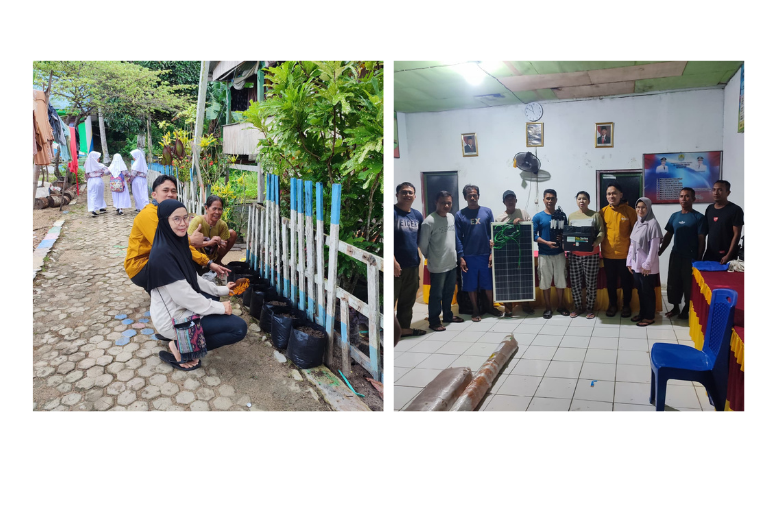
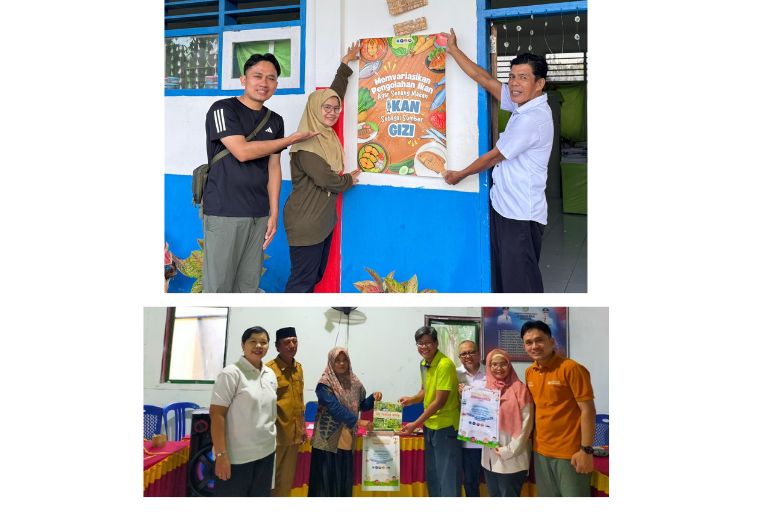
Based on the problems and needs of the Kabetan Village community, the PMKI program had several outputs, including: electrification (assistance with solar panels and a generator), a trial of a portable fish aggregating device (rumpon), diversification of fish-based products for elementary and middle school students and PKK cadres, the establishment of home gardens, production of liquid organic fertilizer, development of local curriculum content for elementary and middle schools, creation of educational posters, and management assistance for the Kabetan Village Library, named Kukosuai.
The PMKI program has been a great help to the people of Kabetan Village in their daily lives. However, the village library is still located far from some hamlets. Dr. Saleha Rodiah, M.Si., suggested that, “given the scattered nature of the hamlets, the PMKI team recommends that the library service points be easily accessible and frequently visited by residents. Two options for the village library service points have been identified: at the Soppe Hamlet pier and in a building next to the Bumbung Hamlet Mosque. The village government will later facilitate the construction of walls to protect the book collection from seawater and pets.” It is hoped that this plan for the village library’s development can be realized by the Kabetan Village Government or become a plan for the next PMKI program, allowing the people of Kabetan Village to access information without being limited by location.
Authors: Saleha Rodiah and Evi Nursanti Rukmana


