


Library and Information Science Study Program’s Lecturer, Mr. Samson CMS., M.I.Kom., became a speaker at the 2023 Literacy Camp activity organized by the Sumedang Reading Park Forum (FTBM) Sumedang. The activity with the theme “Becoming Literate, Towards a Great Generation” was held in Sumedang Regency on Saturday-Sunday (16-17/12/2023).
In this activity, Mr. Samson gave material about the Sundanese Script, Literacy Activists and Cultural Heritage and inheritance. There are several important points that he conveyed: (1) The philosophical and historical basis of a script by a nation/tribe, (2) An easy way to introduce Sundanese ancestral script, (3) The benefits of getting to know ancestral script (Sundanese Script) for the general public, intellectuals, civil and military bureaucrats as well as literacy activists, and (4) Sundanese script as evidence of the nation’s intellectual heritage. The four materials were delivered using the Forum Discussion Group (FGD) method with a dialogical-interactive communication pattern. He used cards called Perperan Cards, which he made himself as a medium for learning Sundanese script.
He said that knowing the Sundanese script is very important, especially in improving literacy, because literacy begins with literacy. He added that literacy is how individuals/groups/nations/states have the awareness to access their ancestral culture, both tangible cultural heritage and intangible cultural heritage, to become (data-information-knowledge to policy/wisdom) in making all decisions for their nation in moving forward—harmonious living in global competition. The Sundanese script itself is the nation’s ancestral heritage and is a recording tool of civilization. It has been registered with the World Sundanese Script Agency called UNICODE. For Mr. Samson, the more people know their culture, the more they know the essence of their identity (getting to know their people), they get to know the legacy of their ancestors’ civilization, and ultimately, they tend to become wiser and wiser, in accordance with how their ancestors lived and lived.
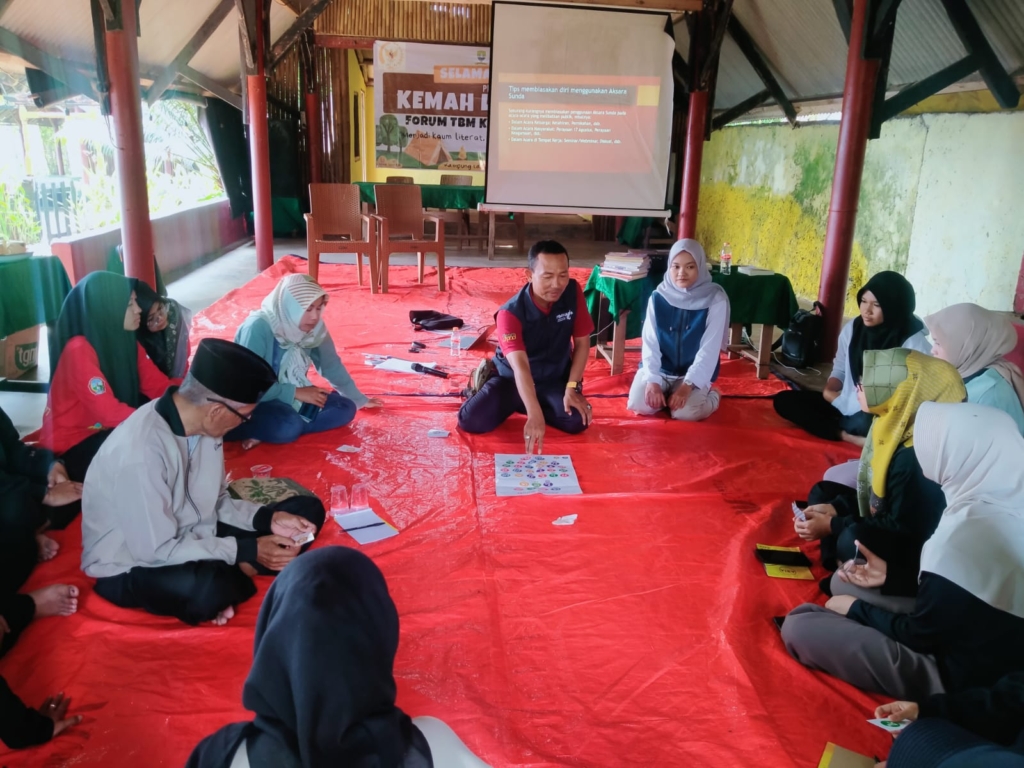
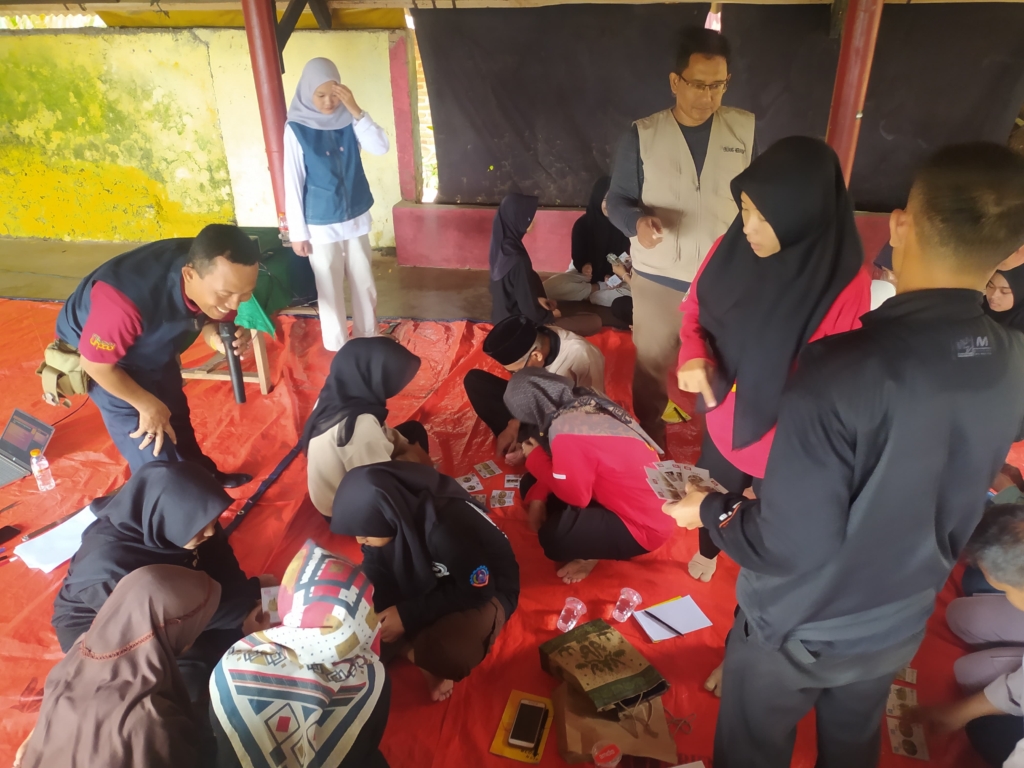
“Just by getting to know the ancestral heritage of whatever tribe you belong to, we will be able to access the collective memory of our nation from the past to the present, and in the future, we are the ones who have to create it so that we can pass it on to our future children and grandchildren. Doesn’t Sundanese say “diteundeun dihandeuleum hieum, postponed to hajuang noon, pikeun nyoko././…t ninggalkeun” – “ti Bihari, kiwari jang baring supagi”. “This proverb is very important for me, who studies library science and information science and also of course, for literacy activists everywhere,” he said. During his journey, Mr. Saomson learned a lot from Mr. Dr. Invite A. Darsa and Mr. Hidayat Surgalaga, who are his teachers and tutors in deepening the study of Sundanese culture.
According to inimahsumedang.com, the participants who took part in this activity were literacy activists, teachers and students. Apart from that, also present were the Head of the Sumedang Archives and Library Service, the Head of the Sumedang Education Service, the Chair of the Central Management of the Sumedang TBM Forum, Regional Management of the West Java TBM Forum and Lecturers at Padjadjaran University. Participants were very enthusiastic about learning Sundanese script. Even Mr. Samson said that he saw Sundanese philosophies in them.
Sundanese script is a very crucial culture for the Sundanese people and Indonesian culture. Mr. Samson expressed his hopes for the development of Sundanese script: (1) Hopefully, universities in West Java can include Sundanese script and Sundanese culture at least as part of course material (MKSDU) or as a separate subject. He said some universities have done that. (2) For our beloved campus (Unpad), at least the names of faculties, buildings/rooms, and Unpad cars are written in two characters (Sundanese and Latin) and including various activities (billboards, banners, t-shirts, etc.) always appear in the Sundanese script. He even dreamed of a letterhead using the Sundanese script. (3) Sundanese script can be used as material in abstracts of scientific works in higher education (thesis, theses and dissertations). So be abstract, speak Indonesian, Sundanese, and English and use Sundanese script. Universities, through their university libraries, provide literacy and translation services into Sundanese, and this will provide a livelihood for friends who study Sundanese culture, such as the Sundanese Literature Study Program.
Next, (4) the Library and Archives Service, the Education and Culture Service and related agencies elsewhere can provide stages as a means of appreciation for people who care about the world of Sundanese script. Like awards, society needs recognition and appreciation, and that is not a matter of money but recognition of existence. (5) For literacy activists throughout West Java and the archipelago, in each TBM, via its TBM board, the name of the TBM is written in Sundanese script and other provinces in the local script. (6) The names of shops on the main road use Sundanese script. And (7) Departments in charge of tourism and education, the names of tourist attractions and school names use Sundanese script.


