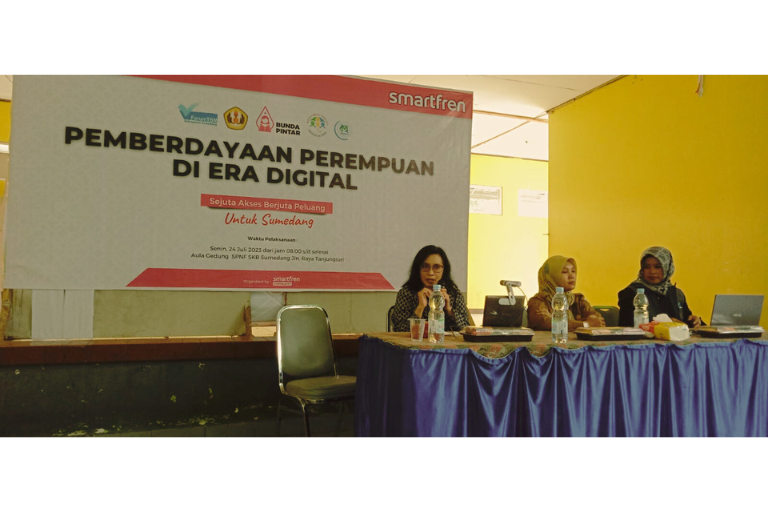
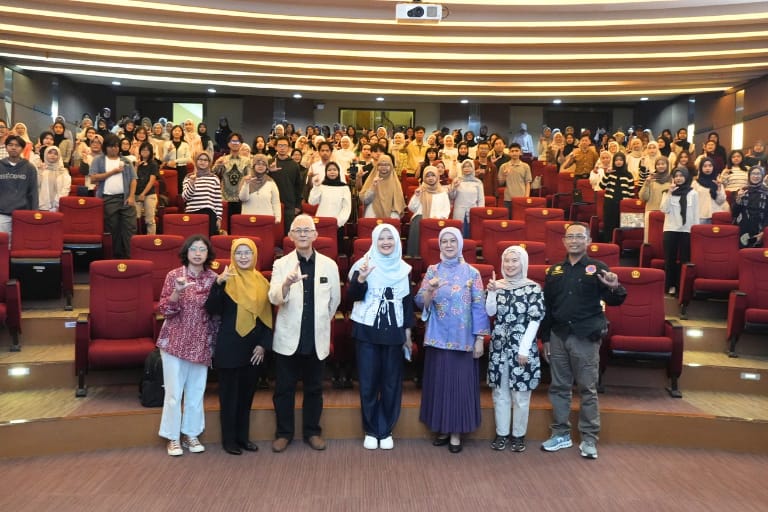
SUMEDANG, Tuesday, June 9, 2026 – The Library and Information Science Study Program at Padjadjaran University (Unpad) successfully held a General Lecture entitled “Community Information, Media, and Digital Literacy.” The event, which took place on Tuesday (June 9, 2026) from 8:00–11:00 a.m. WIB (Western Indonesian Time), was held in a hybrid format, in-person at the Postgraduate Auditorium of the Faculty of Communication Sciences (Fikom) Unpad and broadcast online via live streaming on the YouTube channel @Perpustakaan.SainsInformasi. The event was attended by lecturers and students of the Library and Information Science Study Program, who enthusiastically listened to the presentations from the experts.
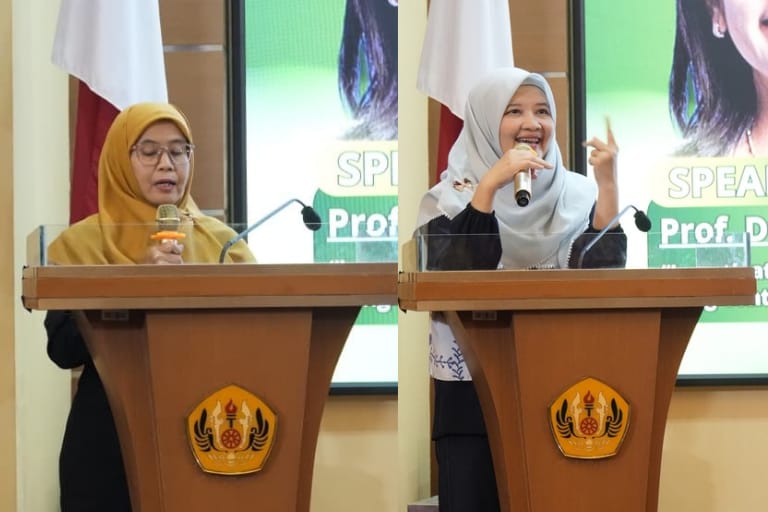
The event officially opened with warm remarks from Dr. Saleha Rodiah, Head of the Library and Information Science Study Program, followed by Dr. Ira Mirawati, M.Si. as the Vice Dean for Academic, Student Affairs, and Research of the Faculty of Communication Sciences, Padjadjaran University. In her remarks, Dr. Ira Mirawati, M.Si., stated that the public lecture was held to help students understand how to strategically utilize and manage media as an adaptive, interactive, and effective learning tool in the digital era. In line with this, Dr. Saleha stated that this public lecture was held as part of the study program’s commitment to continuously updating academic understanding of the digital information landscape. According to her, the presentations from the speakers provided important insight into another aspect of information, media, and digital literacy that directly impacts community aspects.
Moderated by Wina Erwina, M.A., Ph.D., the first presentation session was delivered by Prof. Dr. Mega Subramaniam, Ph.D., a Professor from the College of Information, University of Maryland, USA, and a Fulbright Scholar at Gadjah Mada University. Prof. Mega dissected the concept of digital information practices, which refers to the social and cultural ways in which people search for, create, evaluate, use, and share information in the digital environment. She emphasized the importance of transforming modern libraries into interactive learning spaces that support various learning modalities for young people through a Connected Learning approach.
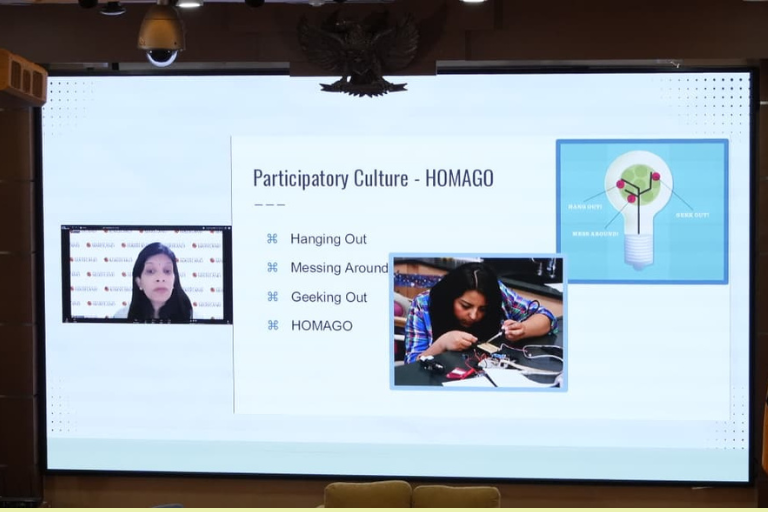
In her presentation, Prof. Mega introduced a participatory youth culture called HOMAGO (Hanging Out, Messing Around, Geeking Out). She presented five examples of Connected Learning-based library programs, including SciDentity (a science story-writing program for underprivileged youth), HackHealth (education on access to credible health information for junior high school students), Teen Squad, Connected Camps (educational video game clubs like Minecraft during the pandemic), and the Slowest Computer on Earth program for learning basic codification concepts. Through these examples, Prof. Mega emphasized that the primary task of today’s libraries is to be fun and engaging places, capable of connecting interests, social connections, and opportunities for young people in a popular way.
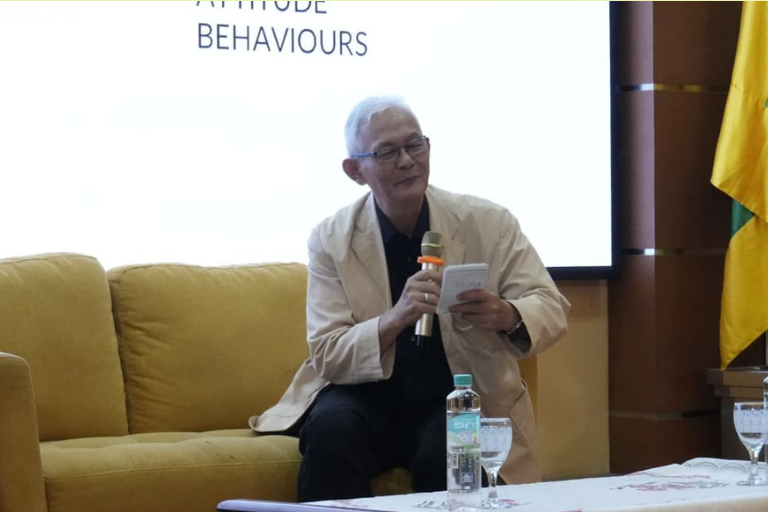
The second session was continued by Prof. Agus Rusmana, M.A., who presented the crucial topic of “Introducing Local Culture to Prevent Digital Engineering Information Attacks.” Prof. Agus highlighted how the presence of digital technology, particularly Artificial Intelligence (AI), has dramatically distorted the purpose of communication. In the pre-AI era, messages were designed to entertain or change behavior in a positive direction. However, today, AI technology is often misused to create false realities, including manipulated images, sounds, and videos, that serve no objective purpose but are simply for fun or even deception.
As a preventative measure, Prof. Agus urged the public not to accept digital information at face value but to independently verify and double-check the source. He emphasized that familiarity with local culture can be a strong defense against identifying fabricated information or hoaxes. To detect fake messages, the public must always ask critical questions about the veracity of the information, rely on digital technical knowledge, think logically, utilize experience, and be observant of the appropriateness of human gestures, expressions, and habits to their local cultural context.
Author: Evi Nursanti Rukmana