


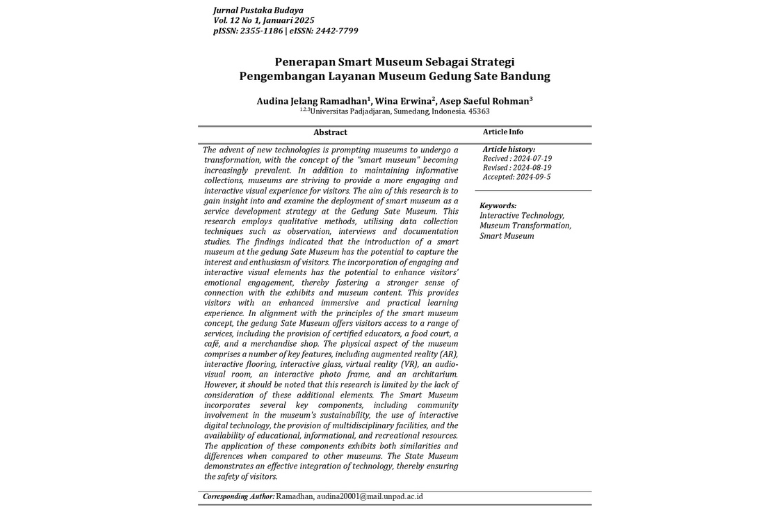
Bandung, 2025 — Recent research by Audina Jelang Ramadhan, a student in the Library and Information Science program at Padjadjaran University, supervised by lecturers Wina Erwina and Asep Saeful Rohman, reveals how the application of the smart museum concept can be a strategy for developing services at the Gedung Sate Museum. This research highlights the use of interactive technology to create a more engaging and immersive visitor experience.
This study found that technologies such as augmented reality (AR), virtual reality (VR), interactive floors, interactive glass, audiovisual rooms, interactive photo frames, and architariums are important elements in providing new experiences for visitors. These innovations not only enrich the information, but also increase emotional engagement so that visitors feel more connected to the museum’s collections and content.
This transformation reflects the need for Indonesian museums to adapt to changing times. Traditionally viewed as outdated or unappealing, museums are now reimagined as spaces that combine education, recreation, and information, while also promoting cultural literacy among the public.
The study employed a qualitative approach, using observations, interviews, and document analysis. Results indicate that the smart museum approach at Gedung Sate has successfully sparked visitor interest and enthusiasm, offering more practical and immersive learning opportunities.
In addition to technological features, the museum also provides complementary services such as certified educators, dining areas, a café, and a souvenir shop, ensuring a more comprehensive visitor experience. However, the research also notes the importance of continuous evaluation to optimize the integration of all available features.
The implementation of the smart museum concept at Gedung Sate contributes to the advancement of the Sustainable Development Goals (SDGs), particularly SDG 4 (Quality Education) and SDG 9 (Industry, Innovation, and Infrastructure). These goals emphasize the use of technology to support education and the development of inclusive cultural infrastructure.
Full article available at: http://media.unpad.ac.id/files/publikasi/2025/rpm_20250204105408_6352.pdf
Writer: Ridha Amalia, Nadzhiva Shaqeena Firdaus, Shelpi Nur Awaliyah


