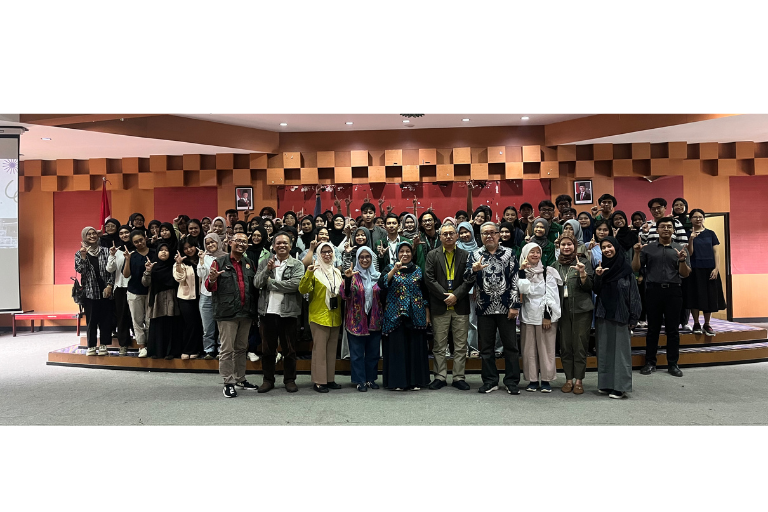
Universitas Padjadjaran, December 7, 2024 — A student from the Library and Information Science (PSI) Study Program at Universitas Padjadjaran (UNPAD) has completed a study highly relevant to the dynamics of modern education. The research, titled “The correlation between students’ information literacy and the utilization of AI text generator in completing academic studies,” explores the correlation between students’ information literacy and their use of AI Text Generators (ATG) for academic tasks.
The research was led by student Muhaemin, under the guidance of lecturers Elnovani Lusiana and Ute Lies Siti Khadijah. The background for the study is the growing popularity of ATGs among students to simplify information access, especially for writing research proposals. However, the study also highlights the potential negative impacts if this technology is not used wisely.
To measure the correlation, the research used a simple correlation method. This approach allowed the researcher to determine the level or degree of relationship between the two variables: students’ information literacy (their ability to find, evaluate, and effectively use information) and their frequency of using ATGs.
The findings show a significant correlation between students’ information literacy and the use of ATGs. However, the correlation level falls into the moderate category. This means that while the two variables influence each other, they are not entirely dependent. Students with good information literacy tend to use ATGs, but their usage is not solely determined by this skill.
The study also identified the most commonly used ATGs, namely ChatGPT and Perplexity, and the main reasons students use them. These reasons include idea and information development, efficiency, writing assistance, concept development, finding references, problem-solving, and improving writing quality. This indicates that students view ATGs as a helpful tool, not a replacement for their own abilities.
This academic publication provides crucial insights for educational institutions and instructors. The findings can help them formulate policies regarding the use of AI in academic settings and develop curricula that focus on strengthening information literacy. The research aligns with the Sustainable Development Goals (SDGs), specifically SDG 4 (Quality Education) and SDG 9 (Industry, Innovation, and Infrastructure), by promoting the responsible use of technology in education.
The article has been published in the Q3 Journal RLJ, making it an internationally relevant source. It is hoped that this research will spark further discussion on how universities can guide their students to use AI tools ethically and productively.
The publication results can be accessed via the following link: http://media.unpad.ac.id/files/publikasi/2025/rpm_20250128103402_9459.pdf
Writers: Ridha Amalia, Nadziva Shaqeena, and Muhammad Ihsan Fauzul Haq